
Clinics
100 % CO₂-negative base-load heat for clinics
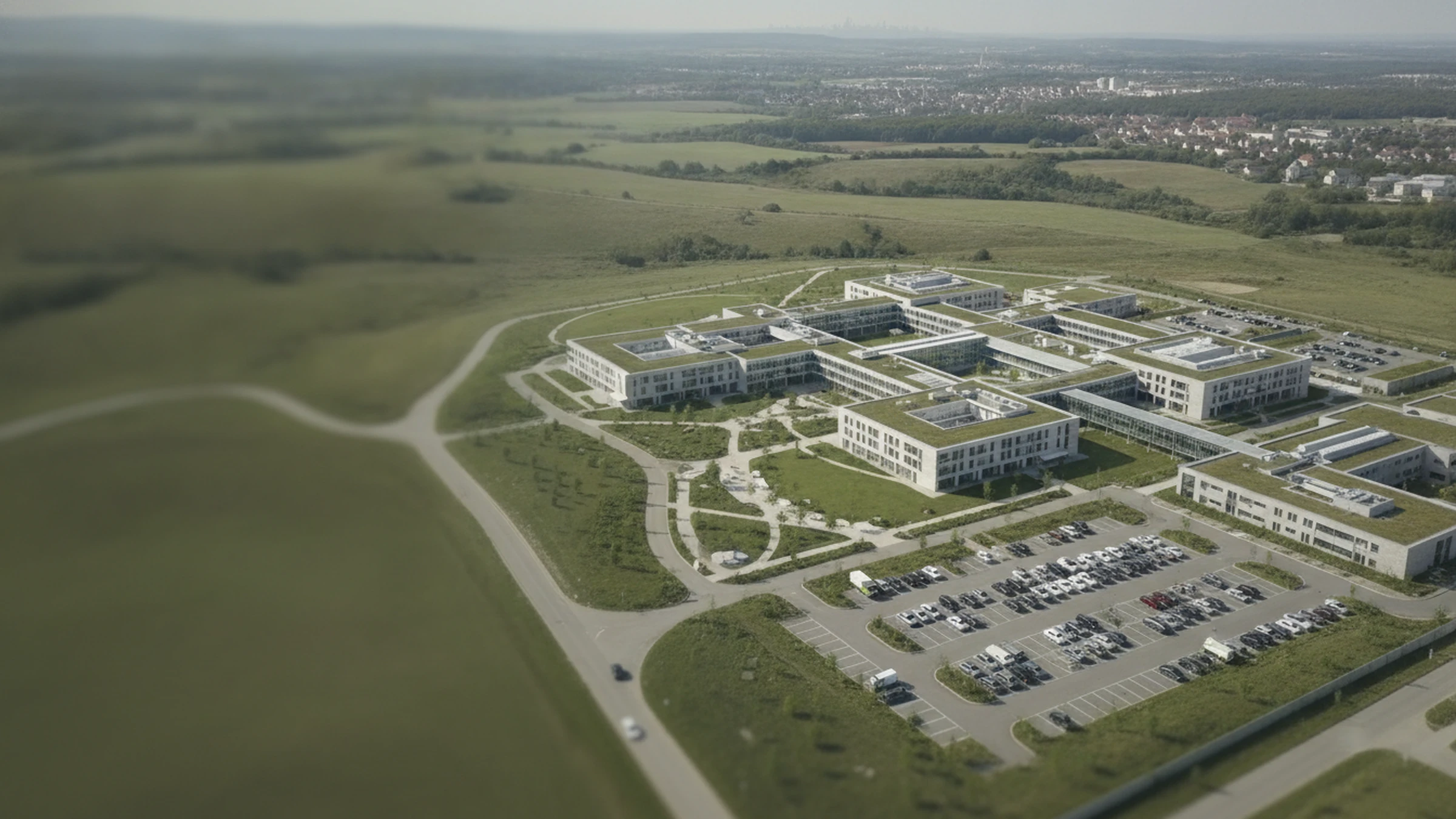
Your clinic needs heat around the clock. A pyrolysis plant delivers it CO₂-negative and generates revenue from carbon and certificates.
Starting point
Today clinics heat with fossil fuels or burn biomass.
You currently generate the heat for the kitchen, laundry, sterilization, technical systems and the central heating with fossil fuels. As a result, your building’s CO₂ footprint becomes a requirement.
Carbonization of residues delivers base-load-capable heat and actively binds CO₂ from the atmosphere.
Fossil heat for base and peak load
CO₂ balance as a growing requirement
Security of supply without interruption
In figures
What a plant delivers
Biomacon plants, calculated at around 8,000 operating hours per year.
160 to 900 kW
Thermal output
Heat from biomass, available year-round.
145 to 815 t/a
Biochar
Output per plant and year.
390 to 2,200 t CO₂/a
CO₂ certificates
1 t of biochar binds around 2.7 t of CO₂ equivalent.
Benefits
Base-load heat, a better climate balance and revenue
Base load, CO₂ balance, revenue.
Base-load heat
100 % CO₂-negative heat, available around the clock.
CO₂ balance
The bound carbon improves the balance and the sustainability report.
Revenue
Biochar and CO₂ certificates lower the heat costs.
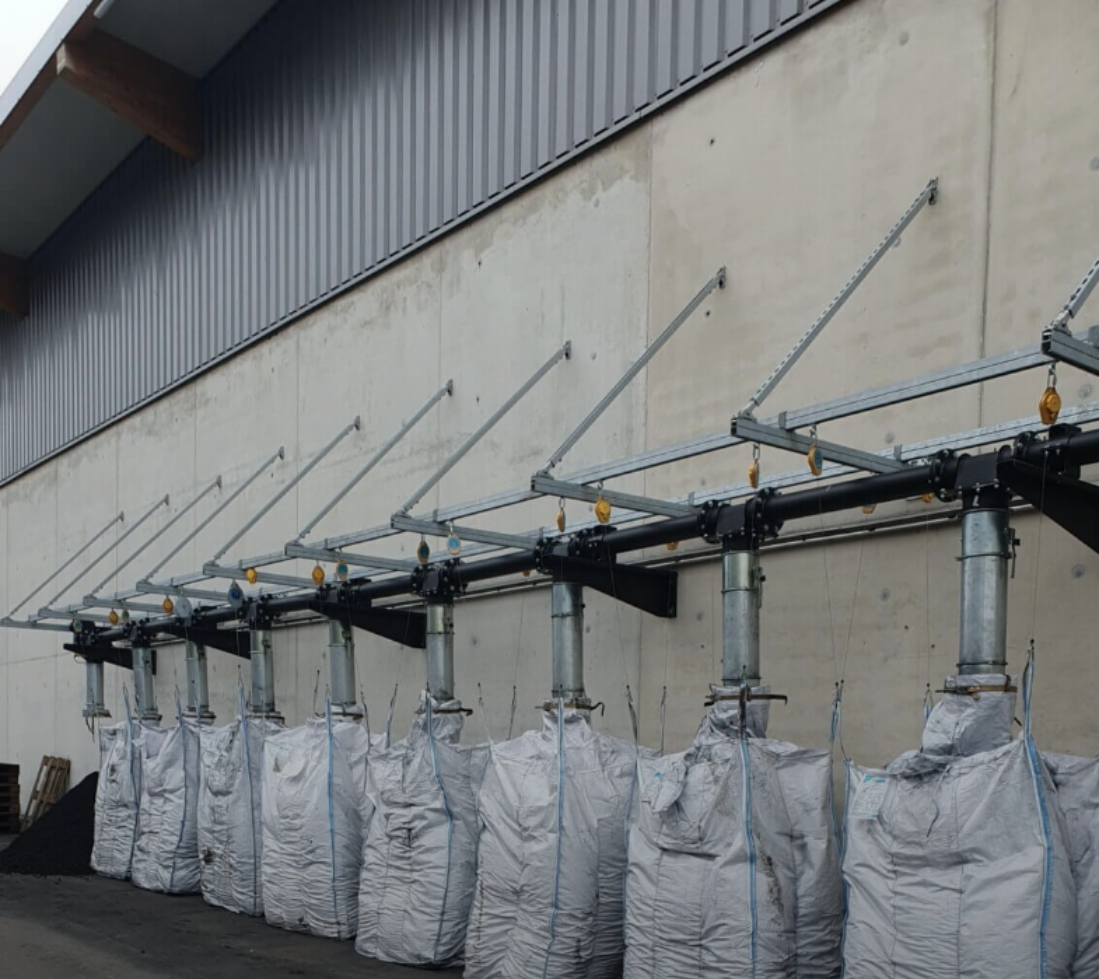
Biomass delivery in the DACH region
No biomass of your own?
Our supplier network covers the DACH region. Internationally we source the biomass individually and develop delivery concepts cooperatively.
- Regional supplier network
- Suitable biomass and volumes
- Delivery and supply planned with you
Integration
How the plant fits into clinic operations
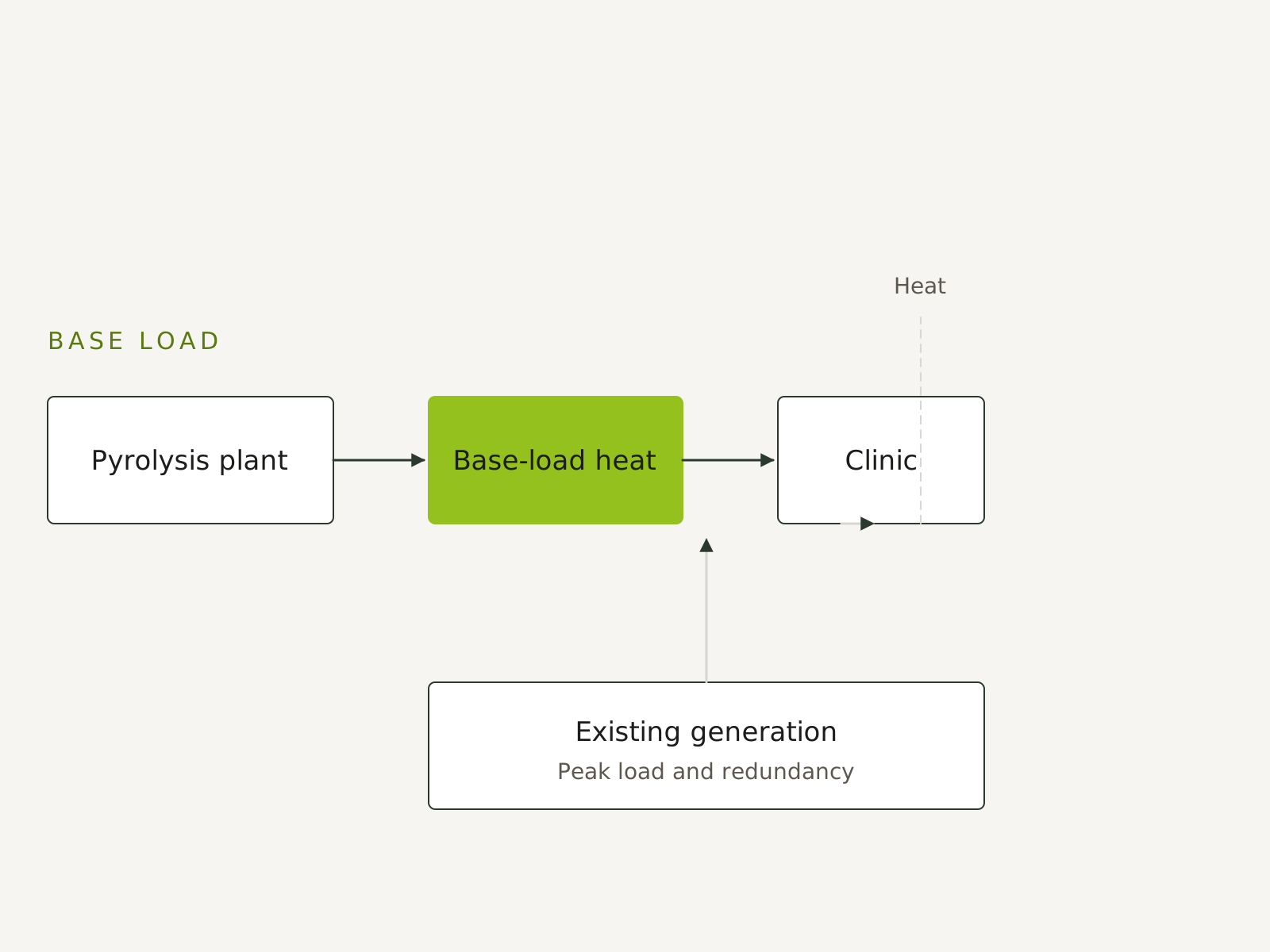
Base-load heat replaces part of the fossil generation. Peak load and redundancy remain in place.
Process
From first meeting to operation
- 01
Preliminary assessment: clarify site, demand and permitting status.
- 02
Site and biomass: define volumes, moisture and supply.
- 03
Concept and profitability: calculate sizing, revenue and funding.
- 04
Construction and commissioning: installation, connection and handover.
- 05
Operation and marketing: use the heat, monetize carbon and certificates.
Practice and partners
Technology from established manufacturers
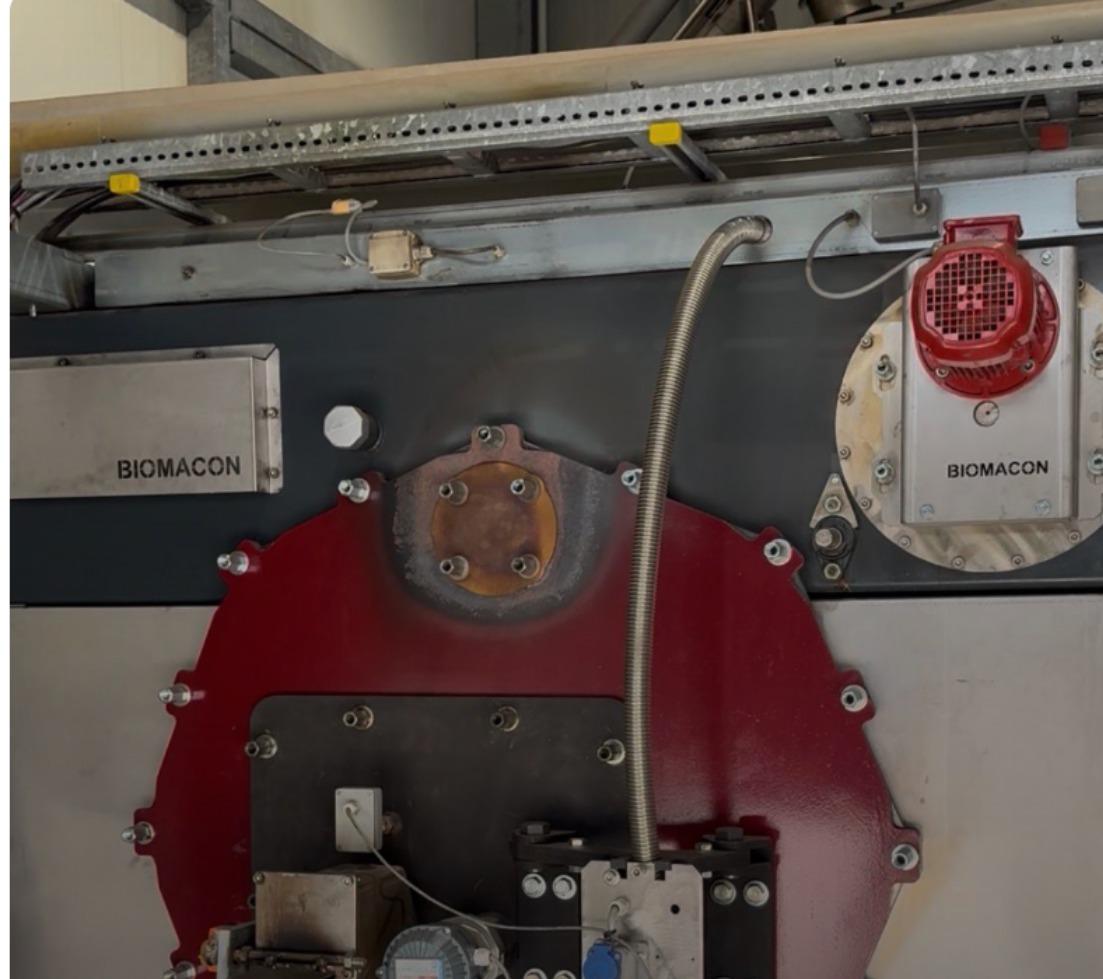
We work manufacturer-independent, among others with Biomacon.
The integrated systems run in continuous industrial operation. We are happy to invite you to tour a running plant.
Plant tours →Practice
Plant tours on site
Tour a carbonization plant in operation. You speak with operators and see the technology in daily use.
Request a quote
FAQ
Frequently asked questions
Do we need our own residues? +
No. Through our regional supplier network we deliver suitable biomass and plan the supply with you.
Do we need a wood chip boiler? +
No. The plant delivers the heat. An existing boiler house can remain and supplement it.
Is the heat CO₂-negative? +
The process binds carbon in biochar. This improves the building’s CO₂ balance.
What happens during an outage? +
If the gas supply is shut off, the heat is missing. An emergency power and redundancy concept is part of the planning.
What does the preliminary assessment cost? +
The preliminary assessment is our entry product. Details are on the offer page.
Next step
Review base-load heat for your clinic
Tell us your load profile, heat demand and installation site. We check feasibility for your location.
You will receive a non-binding response within 24 hours.