
Wastewater treatment plants
Wastewater plants: turn residues into value, filter pollutants
Wastewater treatment plants and water associations are under pressure. A pyrolysis plant turns residues into value on site and delivers heat.
Starting point
Sewage sludge, micropollutants, costs
Disposal routes are narrowing and becoming more expensive. Wastewater plants are looking for ways to use residues in their own process.
For the fourth treatment stage and micropollutants you need additional technology. Sludge drying is the largest heat consumer at your site.
Turn sewage sludge and residues into value on site.
Immobilize micropollutants and address PFAS inputs in a targeted way.
You use the process heat for sludge drying.
In figures
What a plant delivers
Biomacon plants, calculated at around 8,000 operating hours per year.
160 to 900 kW
Thermal output
Heat from biomass, available year-round.
145 to 815 t/a
Biochar
Output per plant and year.
390 to 2,200 t CO₂/a
CO₂ certificates
1 t of biochar binds around 2.7 t of CO₂ equivalent.
Benefits
Benefits of carbonization for your wastewater plant
You use the process heat directly for drying and produce your own filter carbon. In addition, you recover phosphorus and earn additional revenue.
Heat for sludge drying
With the process heat you dry the sewage sludge and supply the largest heat consumer on site.
PFAS filter carbon
Biochar-based filter media bind organic pollutants such as PAHs and address PFAS compounds to protect water bodies.
Phosphorus recovery
You recover phosphorus from the carbon. The use of sludge-based carbon as fertilizer is currently not approved under fertilizer law.
Revenue
Biochar and CO₂ certificates as additional revenue.
Biomass delivery in the DACH region
No biomass of your own?
Our supplier network covers the DACH region. Internationally we source the biomass individually and develop delivery concepts cooperatively.
- Regional supplier network
- Suitable biomass and volumes
- Delivery and supply planned with you
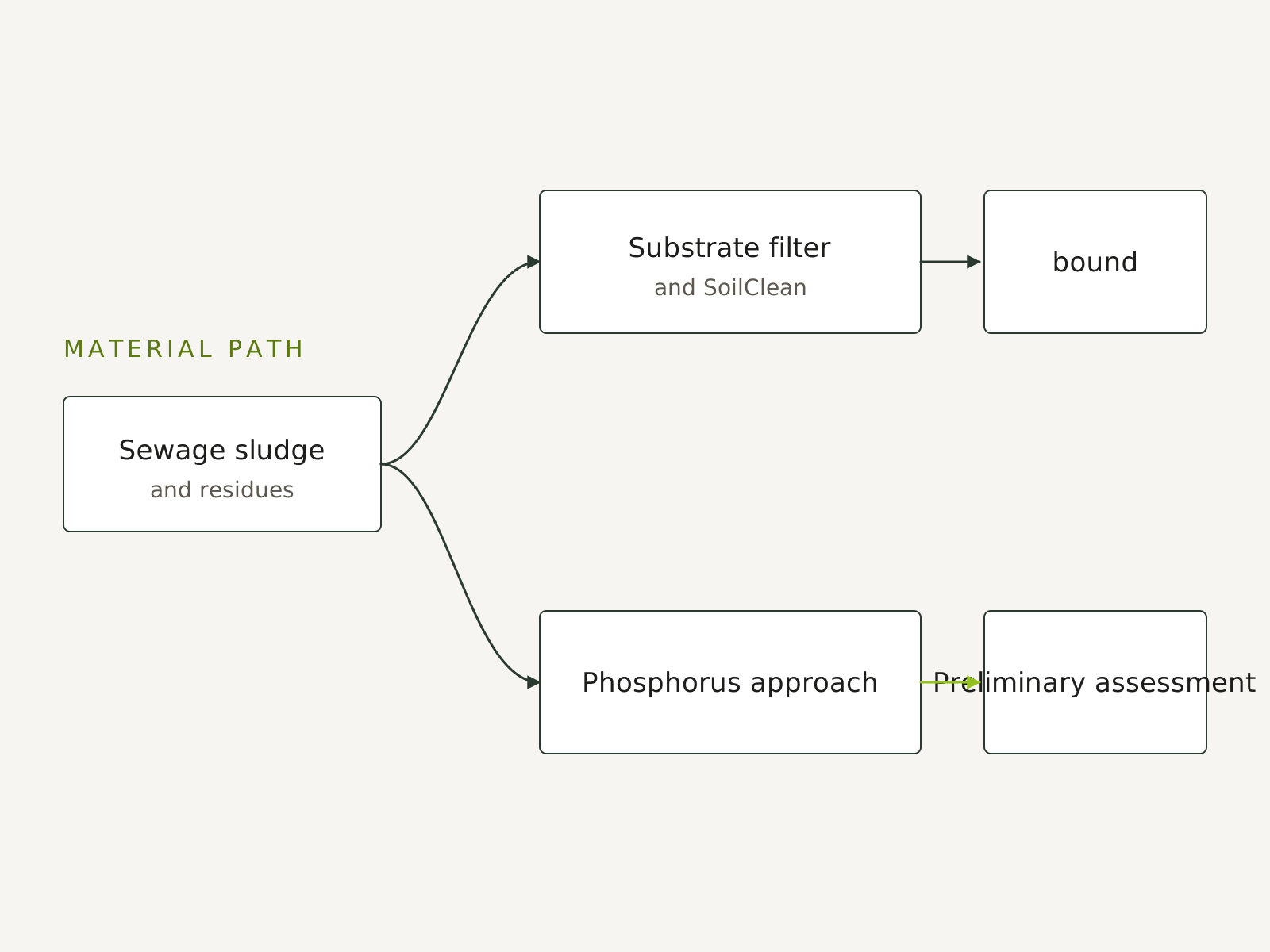
Phosphorus, SoilClean, substrate filter
We pursue phosphorus recovery as an approach and review it for your site. SoilClean and a substrate filter bind pollutants from the water. The approach belongs in the preliminary assessment, not in a finished promise.
- Review phosphorus recovery as an approach.
- SoilClean for contaminated substrates.
- Substrate filter for the water path.
AquaClean: pollutant filter carbon
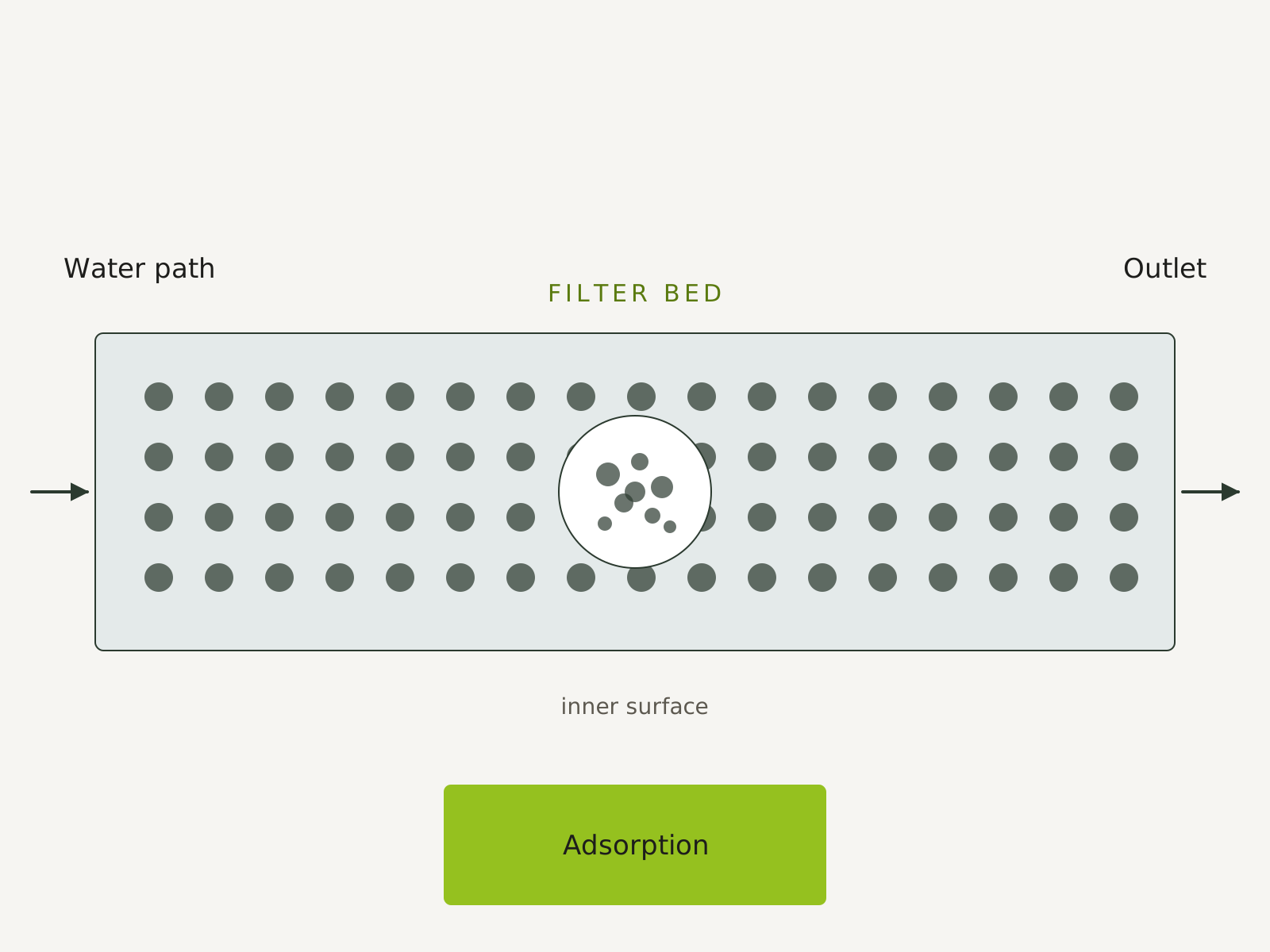
AquaClean stands for our pollutant filter carbon in the water path. Filter carbon binds organic pollutants permanently in the substrate. Details on quality, grain sizes and application are on the product page.
- Adsorption and immobilization at the inner surface.
- For the water path and the fourth treatment stage.
- Preliminary assessment with engineering offices and laboratory partners.
Process
From first meeting to operation
- 01
Preliminary assessment: clarify site, demand and permitting status.
- 02
Site and biomass: define volumes, moisture and supply.
- 03
Concept and profitability: calculate sizing, revenue and funding.
- 04
Construction and commissioning: installation, connection and handover.
- 05
Operation and marketing: use the heat, monetize carbon and certificates.
Practice and partners
Technology from established manufacturers
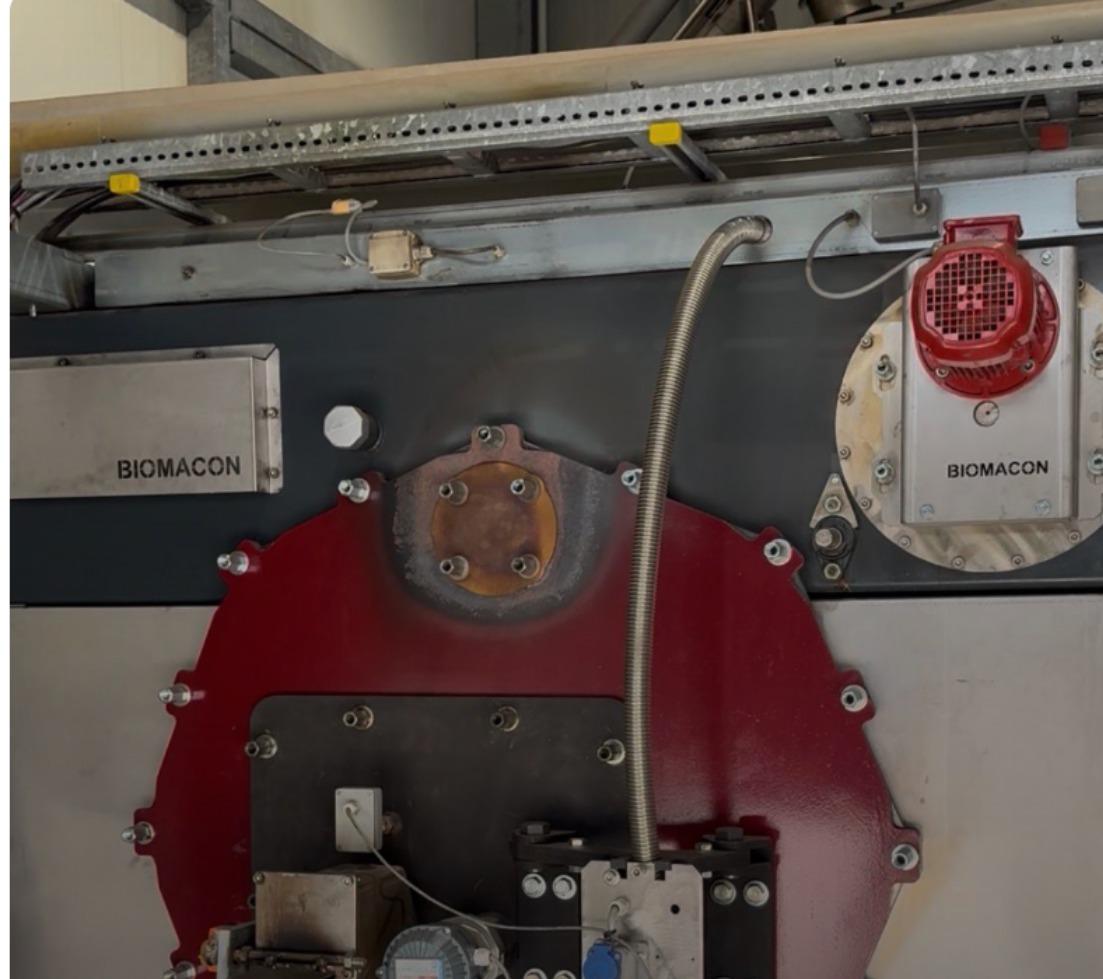
We work manufacturer-independent, among others with Biomacon.
The integrated systems run in continuous industrial operation. We are happy to invite you to tour a running plant.
Plant tours →Practice
Plant tours on site
Tour a carbonization plant in operation. You speak with operators and see the technology in daily use.
Request a quote
FAQ
Frequently asked questions
Does the plant replace our wastewater plant? +
No. The wastewater plant remains. Pyrolysis adds a material stage for sewage sludge and residues.
What about phosphorus? +
Phosphorus can be recovered from the carbon, and we review this recovery for your site. The use of sludge-based carbon as fertilizer is currently not approved under fertilizer law.
Do we have to buy fuel? +
No. Through our regional supplier network we deliver suitable biomass and plan the supply with you.
What does the preliminary assessment cost? +
The preliminary assessment is our entry product. Details are on the offer page.
How does permitting work? +
Plants for the thermal treatment of biomass are subject to the Federal Immission Control Act. We review the path for each project individually.
Next step
Review the potential for your wastewater plant
Tell us your residue volumes, water path and heat demand. We check whether a plant pays off for your site.
You will receive a non-binding response within 24 hours.