
Biogas & the end of the EEG
Pyrolysis as a new revenue stream
Your flexibilized CHP unit no longer runs continuously for the fermenter temperature, while the cost of storing and spreading your digestate rises. Integrated pyrolysis closes these gaps in your operation. Its waste heat compensates for the heat shortfalls.
Starting point
Heat, digestate and expiring subsidy
Missing base-load heat puts your fermenter temperature at risk.
Unused digestate burdens you with storage and transport costs.
With the subsidy ending you need new revenue at your site.
In figures
What a plant delivers
Biomacon plants, calculated at around 8,000 operating hours per year.
160 to 900 kW
Thermal output
Heat from biomass, available year-round.
145 to 815 t/a
Biochar
Output per plant and year.
390 to 2,200 t CO₂/a
CO₂ certificates
1 t of biochar binds around 2.7 t of CO₂ equivalent.
Benefits
New revenue for your site
You produce marketable biochar for agricultural applications. Nutrient-rich digestate biologically charges the carbon and increases its value. In addition, permanent carbon storage generates revenue through certified removal certificates.
Biochar
Fixed purchase agreements for the biochar you produce are possible.
CO₂ certificates
Revenue from internationally recognized CO₂ certificates.
Heat
Reliable heat supply for connected heat customers.
Biomass delivery in the DACH region
No biomass of your own?
Our supplier network covers the DACH region. Internationally we source the biomass individually and develop delivery concepts cooperatively.
- Regional supplier network
- Suitable biomass and volumes
- Delivery and supply planned with you
Use heat and gas purposefully
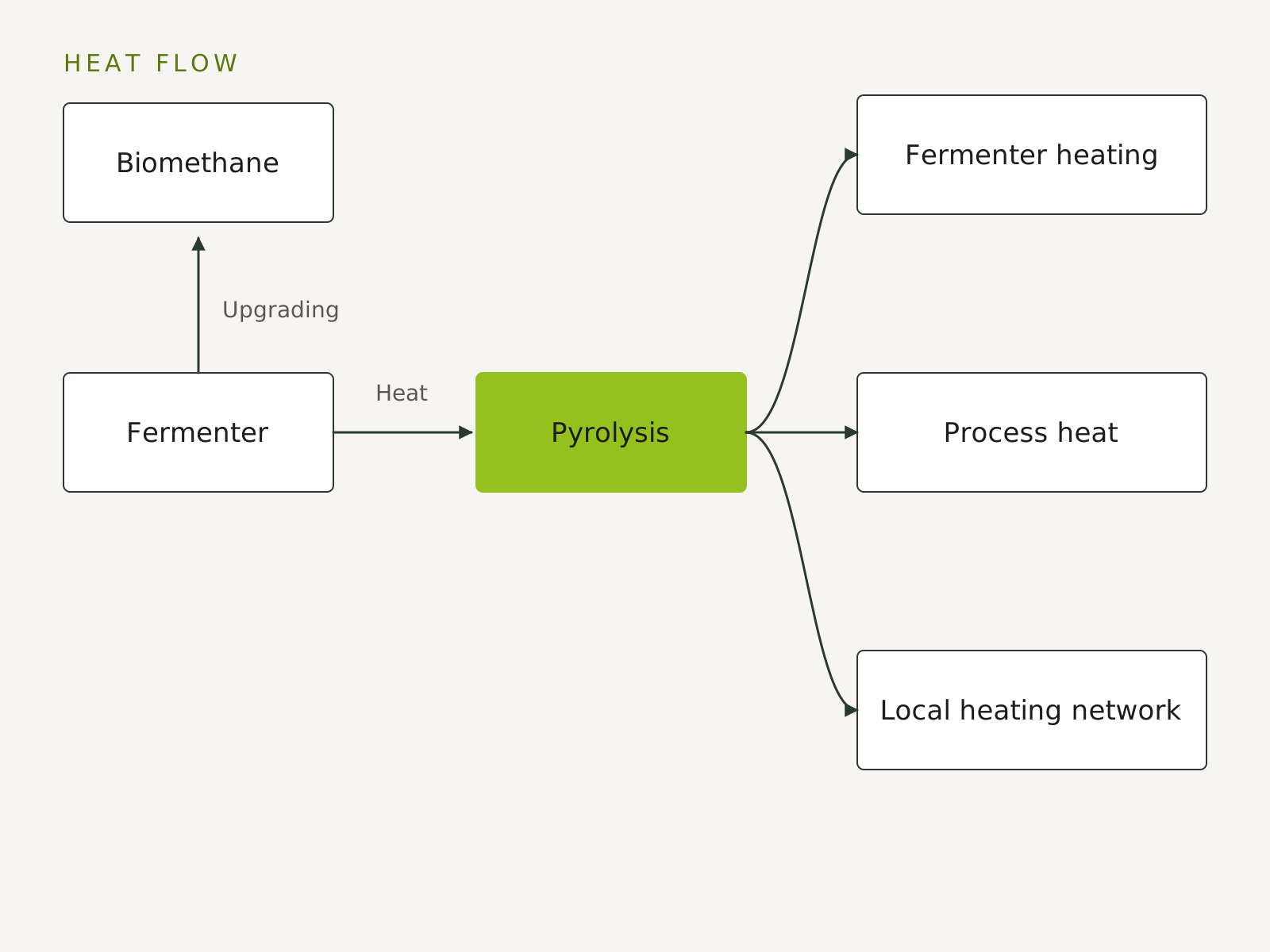
After the end of the EEG, biogas can be upgraded to biomethane. The pyrolysis heat covers fermenter heating and process heat. It delivers base-load heat for an existing or new local heating network, even after the EEG subsidy ends.
- Biomethane upgrading after the end of the EEG.
- Fermenter heating and process heat from pyrolysis heat.
- Base-load heat for an existing or new local heating network.
Digestate and biochar
Nutrients from the digestate
Digestate enriches the biochar with nutrients. This produces a substrate for soil treatment, the growing media industry and peat replacement.
Soil treatment
Substrate for treating contaminated and nutrient-poor soils.
Growing media industry
Raw material for peat-free substrates and blends.
Peat replacement
Contribution to peat replacement in substrates and growing media.
Technical coordination
Technical coordination with your interfaces
Every site differs in substrates and heat demand. We check your interfaces for gas, heat and solids in advance.
Heat exchangers
Corrosion-resistant heat exchangers secure the heat transfer.
Formulations
Targeted formulations for activation with digestate.
Plant size
Manufacturer-independent assessment of the right plant size.
Practice and partners
Technology from established manufacturers
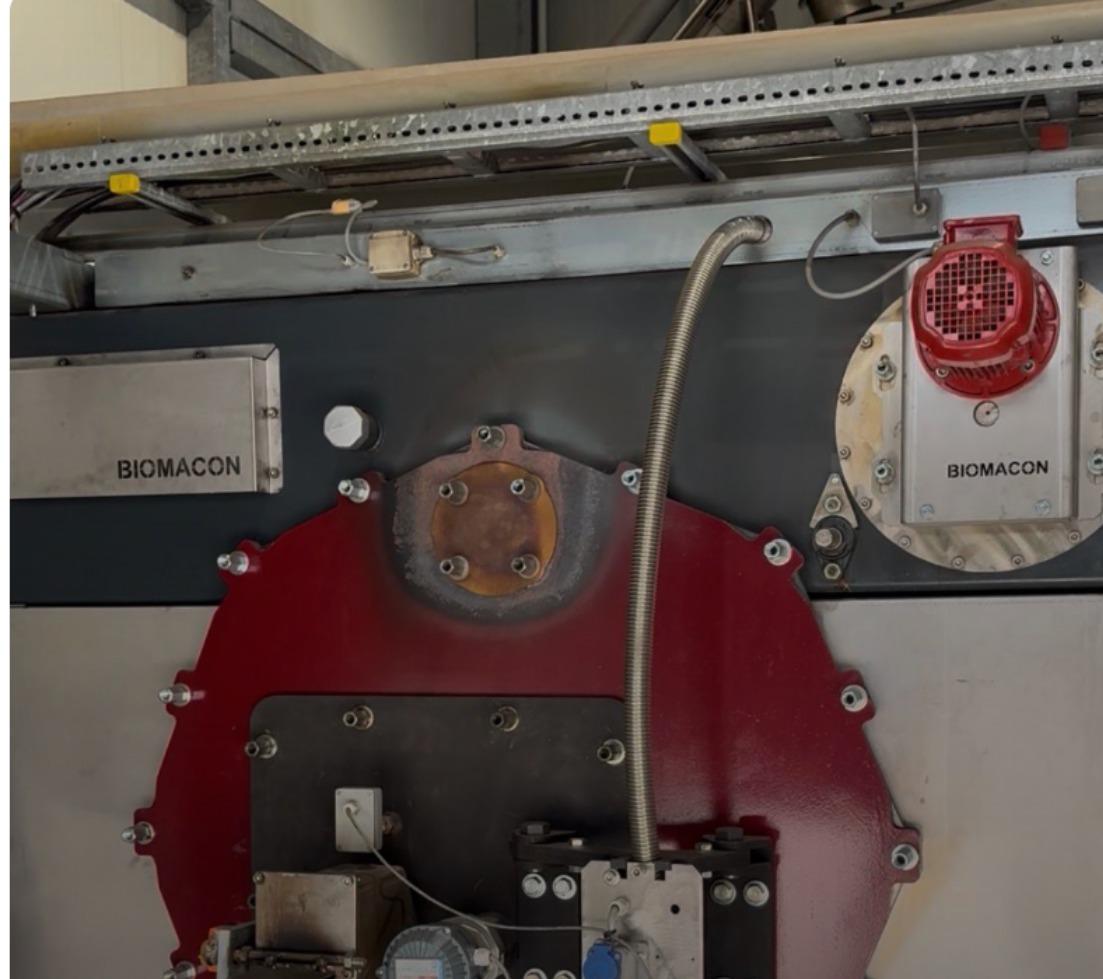
We work manufacturer-independent, among others with Biomacon.
The integrated systems run in continuous industrial operation. We are happy to invite you to tour a running plant.
Plant tours →Practice
Plant tours on site
Tour a carbonization plant in operation. You speak with operators and see the technology in daily use.
Request a quote
FAQ
Frequently asked questions
What does the preliminary assessment cost? +
The preliminary assessment is our entry product. Details are on the offer page.
Can the plant be hybridized with the existing setup? +
Yes. The carbonization plant is hybridized with your existing plant.
Which residues are approved as input? +
Dry, carbon-rich residues such as screen fractions, landscape maintenance wood and wood residues are suitable. We check suitability in the preliminary assessment using your substrates.
What happens to the digestate? +
The digestate charges the biochar with nutrients. This produces a substrate for soil treatment, the growing media industry and peat replacement.
Next step
Can pyrolysis pay off for your operation?
You receive a factual initial assessment for your site. We review your current heat demand, digestate volumes and existing grid capacity. Before you invest, you learn which revenue is realistic.
You will receive a non-binding response within 24 hours.